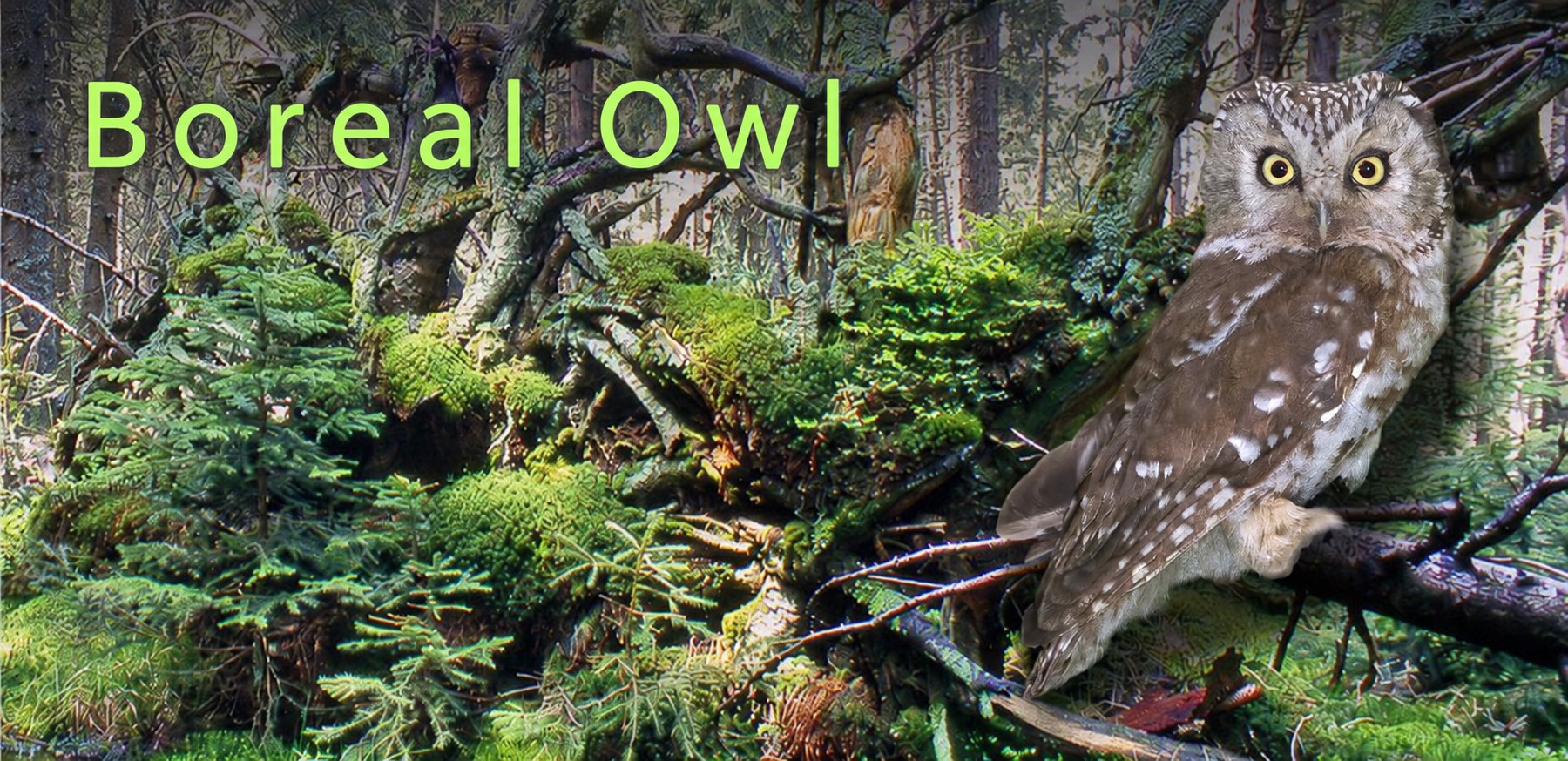


Diet of the Boreal Owl (Aegolius funereus)
Across its European distribution range, the diet of the Boreal Owl consists primarily of small mammals, particularly voles of the genus Microtus, the bank vole (Myodes glareolus), field mice of the genus Apodemus, and shrews of the genus Sorex. Small birds are also represented to a lesser extent (Korpimäki 1986). In the Fennoscandian region, vole populations exhibit marked interannual abundance fluctuations, often in 3- to 5-year cycles. The availability of this prey significantly influences the breeding density and reproductive success of the Boreal Owl, with the nature of population fluctuations varying depending on geographic location and local ecological conditions (Korpimäki 1986).
In the Czech Republic, the Boreal Owl's diet mainly comprises the field vole (Microtus agrestis), common vole (Microtus arvalis), bank vole (Myodes glareolus), yellow-necked mouse (Apodemus flavicollis), and wood mouse (Apodemus sylvaticus). Other species recorded in the diet include the hazel dormouse (Muscardinus avellanarius), Eurasian Pygmy Shrew / Common Shrew (Sorex araneus), Eurasian Pygmy Shrew (Sorex minutus), Alpine shrew (Sorex alpinus), and white-toothed shrews of the genus Crocidura. Small birds are also represented to a lesser extent (Vacík 1991, Hudec & Šťastný 2005).
The Boreal Owl is heavily dependent on the availability of small mammals. In years of low rodent numbers, breeding activity may be reduced, clutch size and nesting success lowered, or breeding skipped altogether. Conversely, in years with high small mammal density, both the number of breeding pairs and reproductive success tend to be higher (Poprach unpubl.).
Author: Karel Poprach


During years of high small mammal abundance, food caches containing more than ten prey individuals can sometimes be found in Boreal Owl nest boxes. Photo: © Karel Poprach.