


Habitat and Breeding Requirements of the Boreal Owl (Aegolius funereus)
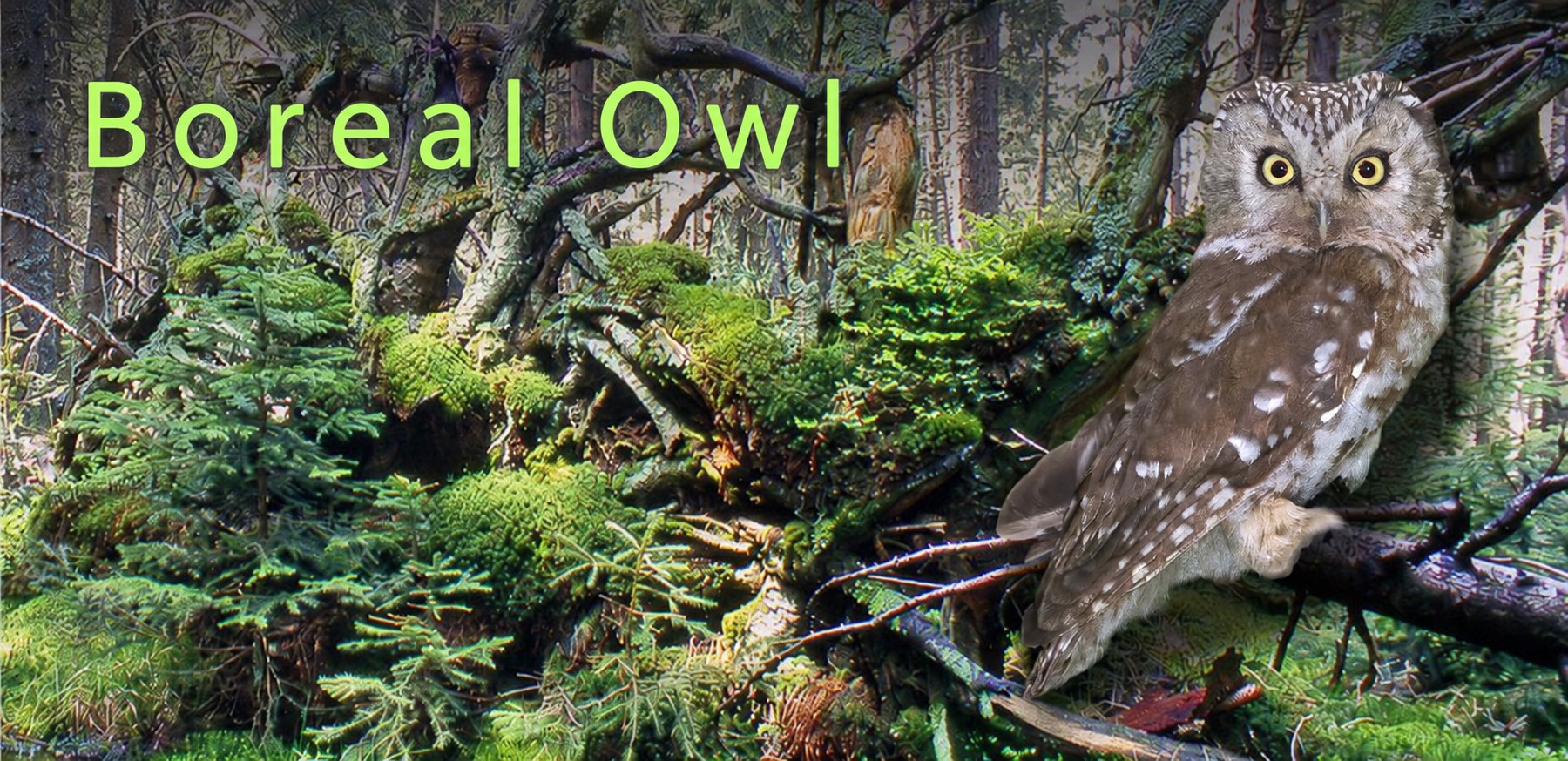
The Boreal Owl inhabits mainly forests at higher elevations in Central Europe, particularly coniferous forests dominated by spruce. However, it also breeds in mixed forests, including spruce stands with an admixture of pine, birch and aspen, as well as in predominantly pine forests. Breeding densities may be considerably higher in spruce-dominated forests than in pine forests. For example, in Finland, higher occupancy of breeding territories and greater nesting success have been reported in landscapes with a relatively high proportion of spruce forests and agricultural land and a low proportion of pine forests (Korpimäki 1997).
In the Czech Republic, the Boreal Owl inhabits mature forest stands, particularly spruce and mixed forests, although breeding has also been recorded in beech forests (Šťastný et al. 2006). The species has also been recorded breeding in areas affected by industrial air pollution, including forest clearings with scattered cavity-bearing trees (Šťastný et al. 2006). Its breeding distribution and the number of nesting pairs are strongly influenced by food availability, particularly the abundance of small mammals, and the availability of suitable nest cavities (Poprach, unpublished data).
Throughout much of its European range, the Boreal Owl nests primarily in cavities excavated by the Black Woodpecker (Dryocopus martius), although cavities excavated by other woodpecker species may occasionally be used. In commercially managed forests, suitable natural nest cavities may be scarce. The Boreal Owl readily occupies appropriately designed nest boxes, which can provide an important additional nesting resource in some European regions.
According to Korpimäki (1997), approximately 11,000 nest boxes had been installed for the Boreal Owl in Finland. These nest boxes substantially increased the availability of nesting sites and may have helped reduce some of the negative effects of intensive forest management on breeding opportunities. The installation and maintenance of extensive nest-box networks can therefore be an effective conservation measure in managed forests, particularly where suitable natural cavities are limited.
Author: Karel Poprach
Select your language